If You Used AI to Build It, You Built It
The anger is real. The keyboard test is not.
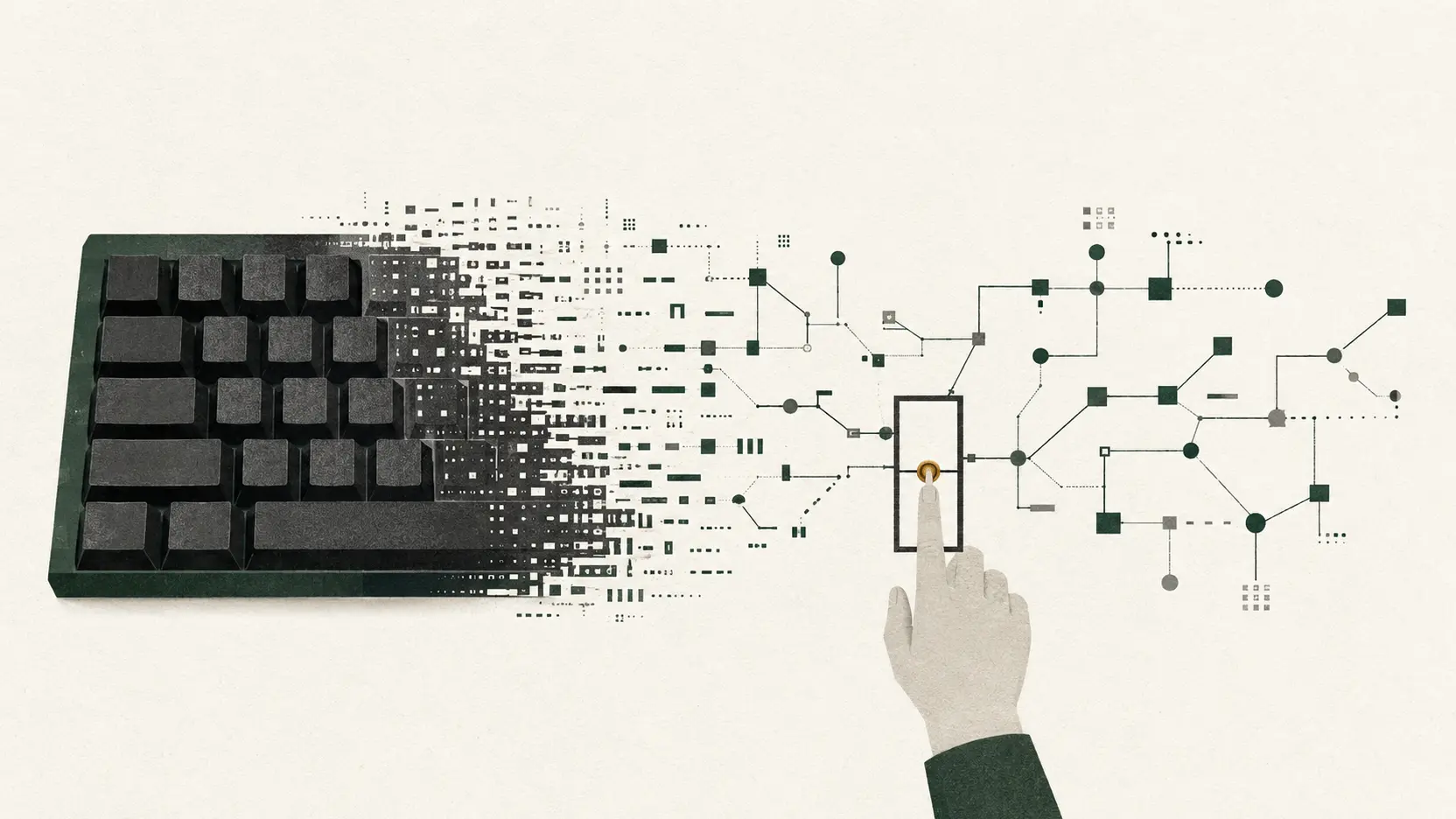
I keep seeing the same argument on X.
It goes like this: if AI wrote the code and you barely touched the keyboard, can you really call yourself a programmer?
My answer is yes. If you used AI to turn an idea into a working thing, you built it.
That does not mean you wrote every line, understand every detail, or deserve trust without testing. It means typing is not the only form of building.
That is the short answer. The long answer is about something bigger: what tools are for, why this argument feels so personal, and who may be locked out of the new tools.
What technology actually is
Start with a simple point: technology is a tool. A useful tool helps us do something new, do it faster, or do it with less wasted effort.
For a long time, learning the tool itself was one of the hardest parts of programming. You spent years on syntax, libraries, build systems, deployment, and tiny mistakes that could eat an afternoon. That work was real. The skill people gained from it is real too.
But the struggle was never the goal. It was the cost of reaching the goal.
A programmer is useful because they can turn a need into a working system and notice when that system is wrong. They are not useful because typing code is slow or because a missing semicolon ruined their day.
We already accept many layers of automation. A compiler writes the machine code. A framework writes the boring plumbing. A cloud service runs the servers. We still say the person who chose the design and made the system work built it.
AI moves that line much further. It can now write large parts of the source code. It can also write bad code with great confidence. So the scarce part shifts from typing to judgment: choosing the goal, giving direction, checking the result, and taking responsibility for what ships.
The tool is getting easier to use. That is progress. It is also uncomfortable for people whose status was tied to the tool being hard.
Why the argument feels personal
Imagine spending ten years getting very good at something difficult. You can do things most people cannot. The skill becomes part of your income, your status, and your identity.
Then a machine starts doing a large part of it in seconds.
Your skill has not vanished. In fact, it may make you much better at spotting the machine's mistakes. But the skill is less rare, and rarity was part of what made it valuable.
Some fears are completely fair. AI can remove jobs, lower wages, hide bad code, erase credit, and leave teams with systems nobody understands. Those are real arguments. They are not the argument I am answering here.
I am answering the idea that past effort gives us a reason to keep the interface hard. It does not. The years you spent learning are not wasted, but they should not decide which tools everyone must use next.
The movie-ticket version of sunk cost is simple: you do not have to sit through a bad movie just because you paid for the ticket. In the same way, you do not have to defend every painful part of programming just because you once had to learn it.
‘I invested a lot in this skill’ and ‘future users should face the same cost’ are different claims. Some of the gatekeeping around AI quietly turns the first claim into the second.
We have seen a version of this before
In the early 1810s, skilled textile workers in England broke certain new machines. They were not foolish, and they were not against every kind of technology. They targeted employers who used machines to replace skilled work, cut wages, and weaken the rules of their trade.
The Luddites had very little political power. Machine-breaking was a form of pressure and, in many cases, an act of desperation.
It did not stop mechanisation. The state crushed the movement. In 1812, machine-breaking became a capital crime. The National Archives records that 17 men were executed the next year, while others were transported.
Mechanised textile production kept spreading. Its immediate costs were not shared evenly.
Mill owners gained more output and more power over labour. Buyers later gained cheaper goods. Worker protections, legal unions, and social insurance came much later. Displaced workers and their towns paid first.
The lesson is not that the Luddites were stupid for resisting. The lesson is that technology can move faster than the rules that decide who gains and who pays.
History also does not prove that people must accept every use of AI. Workers, voters, and governments can still shape pay, credit, safety, and where automation is allowed.
But as a personal strategy, refusing to learn the tool will not freeze its adoption. Coworkers, competitors, and employers will keep testing it. You can learn to use AI and still argue against bad uses of it. Those positions do not conflict.
The thing that actually scares me
If you want a better target for the anger, look at access.
I live in Tokyo. I pay for top-tier services from OpenAI and Anthropic out of my own pocket. It is real money, but I can treat it as a business cost.
Now picture someone with the same curiosity and motivation in a place where the monthly fee is a large part of their income, the payment method does not work, the service is unavailable, or the internet is unreliable.
Free models are much better than they used to be. But free access can still mean tighter limits, weaker tools, shorter context, or less reliable availability. A person's first experience may be a string of failed runs. It is reasonable for them to conclude that AI is mostly hype.
They are not learning a slightly worse version of what I am learning. They may be learning a different lesson. I am learning how to direct a capable system, catch errors, and build workflows where one step checks another. They may be learning that the tool is not worth another try.
Now run that forward five years.
One person has five years of practice directing and checking AI. The other had fewer chances to practise. The later gap may look like a talent gap even when access played a large part in creating it.
Price is only one layer. UNESCO reported that about 2.6 billion people still lacked internet access in 2024 and warned that the digital divide could become an AI divide. Language, hardware, electricity, region, and education matter too.
A subscription gap can compound into a class boundary. We spent decades making programming easier to enter. It would be a terrible outcome to lower the old gate and quietly build a new one around the best AI tools.
Where I stand
I should be clear about my position. I am strongly on the pro-AI side.
I think much more capable AI is coming soon enough to shape career decisions we make today. That is my belief, not a proven timeline. I want AI to remove mechanical work and give ordinary people more technical power. I have bet my career on that future.
If you are a programmer, mathematician, scientist, or engineer who feels threatened, the best move I see is to learn the tool. Put your judgment on top of its speed. Use your old skills to catch the mistakes that a new user will miss. Learning AI does not require you to approve every way a company may use it.
Human judgment plus machine execution can take on problems that neither side could handle as well alone. That combination is already useful today.
The argument on X about whether AI users are ‘real programmers’ still feels silly to me. People are fighting over a title while other people are building and shipping things.
If you chose the goal, directed the process, tested the output, and took responsibility for the result, you built it. AI may have written the code. You still own what the code does.
The number of keys you pressed tells me almost nothing about quality. What matters is whether the result works, is safe enough for its purpose, can be maintained, and solves a real problem.